Archive for Postpartum Tips

Oh Baby! Fitness Response to New Study saying “Exercise May Not Limit Pregnancy Weight Gain.”

You may have seen the headline, “Exercise May Not Limit Pregnancy Weight Gain.” The story comes from a new Brazilian study of obese women who joined a study group half way through their pregnancy (around 3 – 5 months). The researchers split the women into two groups. Half went to weekly exercise classes and got counseled on nutrition, weight gain and home exercises or walking they could do daily. The other women received standard prenatal care advice, but no extra information on exercise.

Regardless of whether they were assigned to do group and at-home exercise, about half of the women gained more weight than recommended upper limits. Read the full story on the study here.

What do these findings mean?
1- Exercise during pregnancy isn’t about weight loss, it’s about establishing good habits.
Pregnancy is the perfect time to build habits that will last for the rest of your life. As the study states, pregnancy is an “ideal time for behavioral modification for the benefit of both mother and the baby.” Becoming pregnant can inspire women to make important, healthy changes to their lifestyle that can become a model for their children. At Oh Baby! Fitness, we’ve watched lots of women start exercising for the first time during their pregnancy. A healthy habit is created, and after pregnancy, women continue to exercise and feel great and the weight truly starts to come off.

2- Being in shape before getting pregnant matters
Weight is harder to control during pregnancy. Starting your pregnancy at a healthy weight is a great way to lower your risk for c-section and having a large baby. If you start your pregnancy obese or overweight, start an exercise program as soon as your doctor advises. As the article says, “starting an exercise or diet program mid-way through pregnancy probably isn’t as useful as intervening very early in pregnancy — or better yet, before.”

3- Doctors recommend 30 minutes of exercise a day for ALL pregnant women, regardless of weight
Even obese and overweight pregnant women are advised to exercise for 30 minutes a day on most if not all days of the week. These 30 minutes can help you deal with pregnancy complaints (everything from swelling to heart burn to back pain to insomnia can be helped by exercise) while also preparing you for labor and being a new mom. Take the time during your pregnancy to create the healthy habit of exercise and activity that you can pass on to your child.

Comments

Modified Push Ups – Great Pregnancy and New Mom Exercise

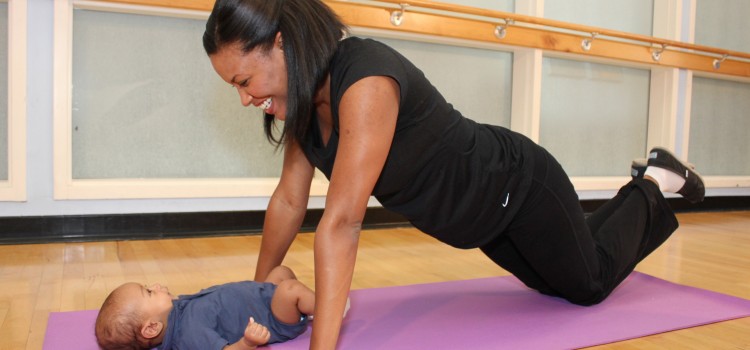
Push ups are a great exercise to build chest, triceps and abdominal strength. Use this quick modification to make push ups safe for pregnant and new moms. Proper modification taught by Senior Oh Baby! Fitness Instructor, Kathleen Donahoe.

Comments

Kegel Exercises – Strengthening Your Pelvic Floor Muscles During Pregnancy

You hear us talk about Kegel Exercises all the time in our prenatal and mom & baby fitness classes. It’s one of the most important exercises you can do before, during and after your pregnancy. Why?

Strong pelvic floor muscles help you in several ways:

1. You’ll avoid incontinence (peeing when you sneeze, jump or laugh).
Did you know 67% of women suffer incontinence after pregnancy?
You don’t have to be a statistic! Learn how to do Kegels now!

2. By doing Kegel exercises properly, you’ll learn how to tighten and RELEASE your pelvic floor muscles. Knowing where your pelvic floor is located and how to engage it is SUPER important during delivery. If you can release your pelvic floor muscle, you can easily push your baby out.

3. Kegel exercises strengthen your pelvic floor and in turn helps strengthen your inner abdominals. Strong abdominals mean better posture and less back pain.

4. Women who perform Kegel exercises during pregnancy and immediately after delivery will recover FASTER than women who don’t do Kegels.

Oh Baby! Fitness Senior Instructor Kathleen Donahoe demonstrates how to perform a proper Kegel Exercise in this short video:

Comments (1)

Common Questions: What should be my first exercise class after I have my baby?

Many clients ask what exercise they should take as their first class back after having a baby. While we have many women take all different kinds of classes and participate in lots of different types of programs, I’ve found that there is a progression that most women enjoy.

Note that all the classes mentioned below are offered by Oh Baby! Fitness. If Oh Baby classes are not offered near you, look online for a similar type of class.

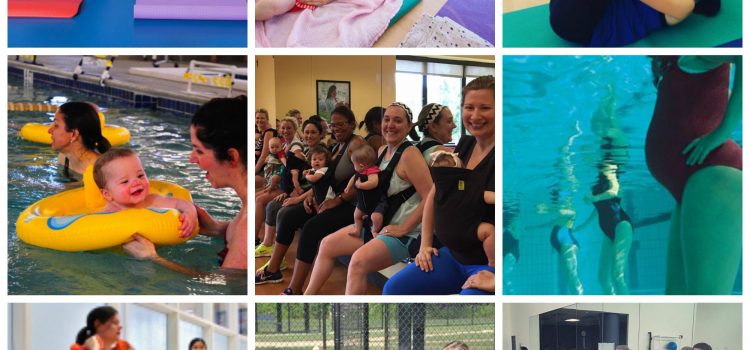
6-12 weeks postpartum: Focus on Ab Recovery in Mom and Baby Pilates and Mom and Baby Yoga. Starting with this class allows you to repair any abdominal distress that happened during pregnancy (ie., Diastasis Recti) or any pelvic floor trauma. This class is also great as it’s easy for moms to breastfeed during some of the exercises, or let their baby sleep on the mat next to them. For babies that are still sorting out their schedule, this class is very flexible in terms of baby involvement.

12-24 weeks postpartum: Focus on Strength Building and Weight Loss in Mom and Baby Fitness or Stroller Workout. These classes focus more on cardio work and losing pregnancy weight while building muscles needed for new moms. The baby is either in the Baby Bjorn or stroller and a little more emphasis is put on vigorous exercise for the mom.

24 weeks and beyond: Focus on Fun and New Goals in H2oh Baby and your own exercise. It can be great for new moms to involve dad in the fun with an H2oh Baby class. This class is often attended by both parents, and babies love it as well! This period is also a good time for mom to consider signing up for a race- a 5k or sprint triathlon or something similar. Training for an event is a great motivation to lose the last few pounds and also to be sure you can exercise regularly.

This is just a sample exercise program for a new mom. What did you find that worked for you? What classes do you wish were offered?

Comments

Common Questions: Does exercising cut down on my milk supply?

Breastfeeding can be such a challenging part of a new mom’s experience. We have many clients who work very hard to be able to breastfeed who are then scared to exercise due to the myths surrounding breastfeeding and exercise.

The good news is that studies have found that moderate-to-high intensity exercise does not impair the quality or quantity of breast milk. That’s good news!

What CAN affect breastfeeding however, is hydration. Women who exercise sometimes forget to increase their water intake and can become dehydrated. Dehydration affects the volume of milk produced—so be sure to drink plenty of water before, during and after exercise. It is recommended that you monitor your hydration status using the color of your urine- the paler, the better.

Another note- if breastfeeding, you’ll need an additional 300 to 600 calories a day. Be sure that you keep appropriate caloric intake even if exercising. We know you’ve worked hard to be breast feed, and we want to be sure that you can exercise and keep your supply up!

Moms- do you have any advice for exercising while breastfeeding? What worked for you?

Comments

Check Out Our New Video: How to Carry a Car Seat Properly

Carrying a car seat incorrectly is the easiest way to injure your back as a new mother. Oh Baby! Fitness Senior Instructor Kathleen Donahoe demonstrates the best and safest way to carry a baby’s car seat.

If you’d like more tips, video and information on safe pregnancy or mom & baby exercise, go to www.ohbabyfitness.com

Comments

Hugging Your Baby – How It Can Help You Have a Better Pregnancy

During Oh Baby! Fitness pregnancy classes, our instructors are always asking moms to “hug your baby” or “draw the baby up and in” while exercising. The instructors are cuing clients to engage their abdominal muscles. Contracting the abdominal muscles leads to better posture, stronger inner abdominal muscles (called the transverse abdominals) and aids in pelvic floor strengthening too.

Moms want to try to have engaged abs most of the time as good posture is one of the quickest fixes for most pregnancy complaints. Knowing how to ‘hug your baby’ during pregnancy is a challenge for some women. Senior Oh Baby! Fitness Instructor Kathleen Donahoe shows you what it looks like to engage the abdominal muscles and hug your baby in this video:

REALLY BIG HUG

Once your baby is on the outside.. you’ll want to do lots of hugging on him or her. My baby is now six years old. A while ago, we realized we were hugging every day, but we weren’t always having BIG hugs. My daughter invented the R.B.H. — A Really Big Hug.

Now, each day.. we ask, “Did I get an R.B.H today?” It makes hugging so special and guarantees we get and give hugs every day! It’s surprising, but as your little one gets older, the hugs and cuddles are fewer and farther between. Really Big Hugs have definitely helped increase my hug count.. and spouses, grandparents, friends.. kitties and doggies.. love R.B.H’s too. Try a Really Big Hug today.. and let me know the response you get!!

Hugs!
Clare Schexnyder
Owner, Oh Baby! Fitness

Comments

Hollowing and Half Roll-up – Great Exercise for 6 Weeks After Pregnancy

After you have your baby, the first abdominal exercise you can do is called “hollowing.” It can be combined with the half roll up. Oh Baby! Fitness Senior Instructor Kathleen Donahoe leads you through a safe exercise for new moms to start their recovery after delivery.

If you have more questions about postpartum exercise, or would like to join an exercise class. Go to www.ohbabyfitness.com

Comments (1)

Postpartum Posture and Alignment in Everyday Activites

As a new mom, you will be doing a lot of the same movements over and over (and over and over and over!) again. For a while, it will feel like all you are doing is feeding your baby and changing its diapers. Unfortunately, a lot of these common activities have moms leaning forward over their baby in uncomfortable positions, which often results in hunched, painful backs. Here are a few tips about how to easily adjust your positioning so that these repetitive activities do not lead to long lasting pain or posture issues.

Changing Diapers
The very best place to change your baby’s diaper is on a changing table or on a surface that does not require any bending over. Changing diapers on the bed or floor can lead to excessive hunching over of the upper back. While the reality is that you will sometimes need to change your baby somewhere other than the changing table (say, at a friend’s house), when home, make an effort to utilize the changing table. If you have to change your baby while s/he is lying on a bed or couch, sit down next to your baby to change the diaper. Do not bend over at the waist. Also, try to put common changing supplies (diapers, wipes, trashcan) in a spot on or near your changing table so that you are not twisting to grab them. When changing your baby, utilize good posture: stand with shoulders over hips over ankles, soften your knees, and relax your shoulders.

Carrying a Car Seat
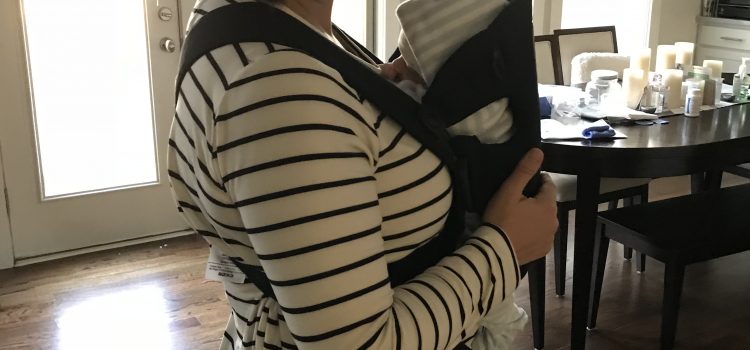
The bottom line is that you want to avoid carrying your car seat. We see women with serious damage to their hips and lower backs from carrying heavy babies in heavy car seats. We suggest all clients either use a stroller or wear their baby in a wrap, carrier, or sling. Hauling the car seat around is one of the quickest and easiest ways to do real damage to your back. If you do need to carry the car seat, carry it on the front of your body (like you would carry a laundry basket) as close to your center as possible.

Walking With a Stroller
While still pregnant, both you and your partner should try out strollers at the store. You want to find a stroller that allows both of you to stand up straight with your hands on the handles, still have relaxed shoulders, and only slightly bent elbows. If there is a big difference in height between you and your partner, try to find a stroller that has height-adjustable handles. When walking with your baby you want to focus on three key points:
1. Gently pull your shoulders back and down
2. Take long strides, focusing on keeping your shoulders aligned over your hips
3. Gently pull your belly button back towards your spine

Feeding Your Baby
You will spend more time feeding your baby than doing nearly anything else for the first few weeks after labor. Most women, whether nursing or bottle-feeding, spend weeks hunched forward over their baby, which can lead to overstretched, weak back muscles. A few key points that will help with alignment when feeding a baby:
1. Find a chair that allows you to sit tall, but is still comfortable. Most couches encourage a slumped forward posture. Find a chair (manufacturers are making some great ones) that has firm back support and allows your feet to rest comfortably on the ground.
2. If nursing, invest in a breastfeeding pillow. This will bring the baby up to the correct height for feeding, rather than you slumping forward to meet the baby. These pillows are really great at supporting correct feeding posture.
3. If possible, rest your feet up on a stool or ottoman. This will keep you from crossing your legs (which is unhelpful for spine and hip alignment) and will encourage correct posture.

Moms- what have you found that helped keep your back protected?? Any advice?

Comments

Postpartum Fitness: Three Safe Exercises for the First 6 Weeks After Childbirth

Pregnancy and labor can be very traumatic on the abdominals and pelvic floor. While most women are told not to do ANY exercise for the first six to eight weeks after having a baby, it’s important to begin to engage some key muscles very soon after birth. These three exercises are some of the most important things you can do to help your body heal and recover from pregnancy and childbirth, and they will also help prepare your body for its return to exercise when your doctor gives the go ahead.

1-Pelvic Lifts

The first exercise you’ll want to start with is a simple pelvic floor lift- often called a Kegel. This exercise is by far the most important and helpful thing you can do to being to heal and recover your postpartum body. Many doctors will encourage women to start doing these in the hospital. This exercise is especially important if you plan to return to exercise at 6 or 8 weeks- a functional pelvic floor is necessary for most forms of exercise.

How to do it: Imagine a large muscle that spans your hip bones, and reaches from pelvic bone to tailbone. Now imagine lifting that muscle up and holding it for 5 seconds before releasing. Some women find an easy way to visualize it is to imagine stopping the flow of urine. If you are less than 10 days postpartum, you may find it very difficult to perform this exercise– but keep at it. Once you are able to lift, hold for 5 seconds, and release your pelvic floor, you’ll want to come to the next stage: quick flicks. This is where you will fully contract and then fully release your pelvic floor. Think, simply: lift, lower, lift, lower, lift, lower. Alternate 20 seconds of quick flicks with 20 seconds of your 5 second holds. Try to perform this sequence 3 times a day- some women find it helpful to do these while changing diapers or feeding the baby.

2- “Hollowing Out” Your Abs

The second exercise that is safe to perform in the first weeks after pregnancy is a simple transverse abdominal contraction. Your transverse abdominals are the most interior abdominal muscles and are extremely important when it comes to core stability and posture. Getting these deep abdominal muscles moving is a great way to begin to repair core muscles that were overstretched and weakened during pregnancy.

How to do it: Draw your belly button up and back– imagine pulling it to your spine. To begin, hold for 5 seconds, and work up over the first few weeks to 20 seconds. These are great to do as you are feeding your baby, as they encourage correct feeding posture

3- Chest Stretches

Nearly everything you do as a new mom is going to have you hunched forward over your baby. These activities, along with enlarged breasts, means that most new moms walk around hunched over. Not only is it extremely important to stretch out your chest muscles– it will help improve posture and relieve back pain. You’ll also find that if feels great!

How to do it: Stand sideways next to a wall so that one of your shoulders is facing the wall. With a straight arm, place the palm of your hand on the wall next to you at shoulder height. Take a few steps forward. You’ll feel a stretch across your chest. Repeat on the other side. This can be helpful to do after you place your baby down in the crib or swing. It will give your chest a nice stretch before moving on to the next task of the day.

What stretches or exercises felt good after you had your baby? Did you wait until your postpartum checkup to do any exercising?

Comments

« Previous entries Next Page » Next Page »